

The Be You Approach
More Than One Way to Begin
My approach brings conversation, bodily experience, and relationship together. Understanding can be helpful, but it does not always come first. Sometimes settling, movement, or support makes reflection possible. Other times, words help us find our way into something that has been difficult to feel.
I don't assume talking more or looking inward is always the next useful step. We pay attention to how the work affects you and adjust accordingly. You do not need to know why you feel something for us to work with it. We can start with what you notice, even when words or understanding haven't come yet.
I view your responses within the context of your whole life. Your history matters, alongside your health, culture, relationships, and current circumstances. We consider both how you experience it and whether the conditions around you need attention.
Following What Emerges
I bring clinical knowledge and possibilities to our work while remaining open to what I cannot know in advance. An idea or exercise is useful when it helps us make contact with your experience. If it does not fit, we reconsider rather than asking you to fit the approach.
Our relationship is part of that process. We can speak about uncertainty, differences, and moments when I misunderstand you. Your response matters, including when it challenges my understanding.
I value settling without making calm the goal of every session. Sometimes meaningful change feels like rest; sometimes it brings energy, grief, anger, or a clearer sense of direction. What matters is whether the work helps you engage with your life in ways that feel more available and more your own.

“The good life is a process, not a state of being. It is a direction, not a destination.”
— Carl Rogers
Explore · Experience · Receive
These words go beyond describing the services I offer. They capture the thoughtful, collaborative experience we create together.
Explore means getting curious about your feelings, your reactions, and what matters to you. Together, we make room for mixed feelings, uncertainty, and different parts of your experience without rushing to explain them or reach a conclusion.
Experience means putting what you understand about yourself into practice. You might express what you want, practice setting a boundary, or stay with a feeling while someone listens. These moments let you try a different response and notice how it feels, rather than only talking about it.
Receive means noticing how you respond when someone offers care or support. You might welcome it, question it, or feel the urge to pull away. Together, we explore those responses with care, making room for you to accept support in ways that respect your needs and choices.
These principles take different forms across our work. They connect understanding with opportunities to try something new and discover what helps.

“We feel more than we can think, and we live more than we can feel.”
— Eugene Gendlin

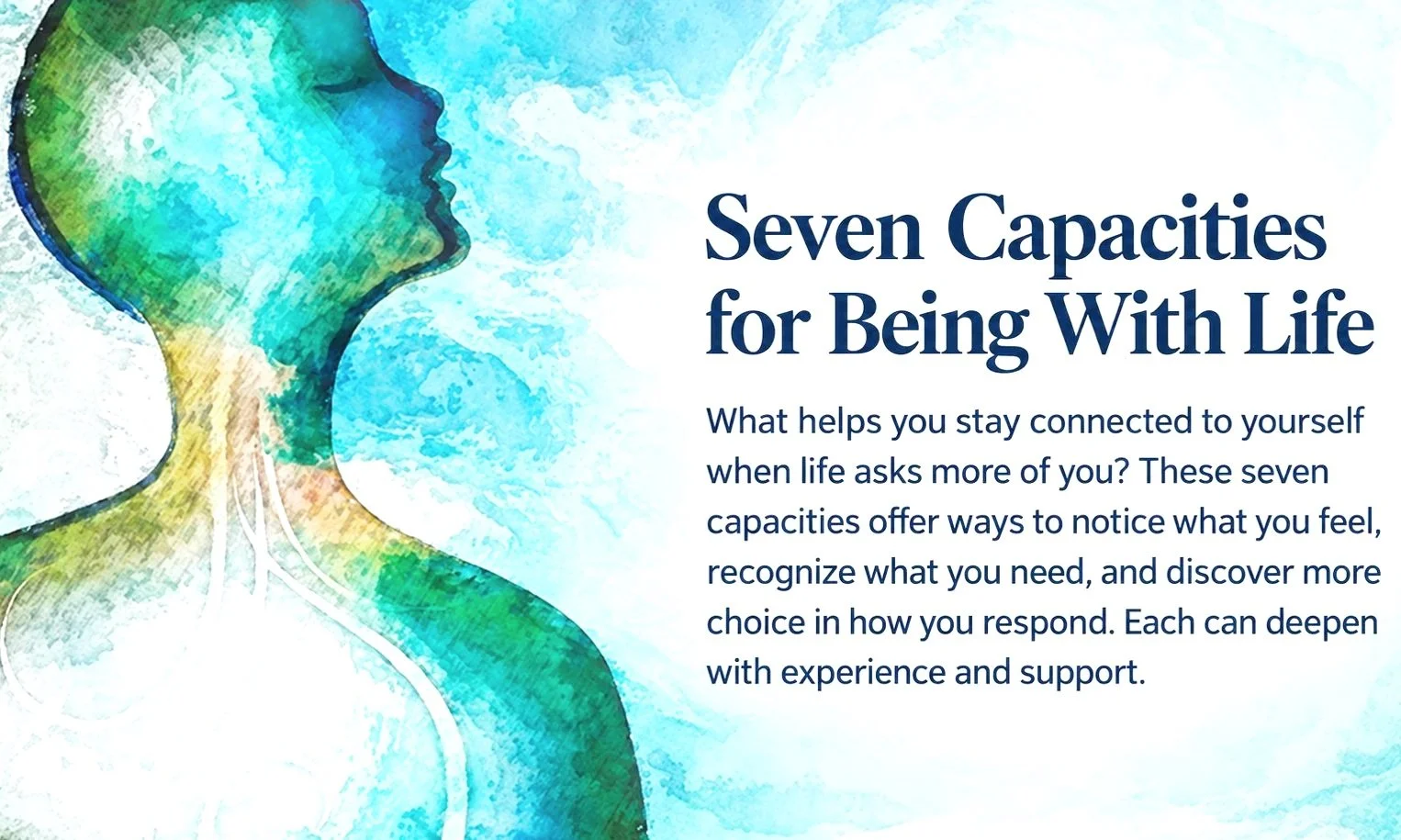
-
What is happening right now?
Attention can begin with something small: a shift in breath, a thought arriving, a feeling in the room. We make space to sense what is here before deciding what it means.
-
Can I remain in contact with this?
Staying does not mean pushing through. It can mean finding enough support to be with a feeling or sensation for a moment, and knowing that we can pause or turn toward something steadier.
-
What wants to shift?
Movement may be literal, emotional, or relational. We can become curious about an impulse, a shift in posture, a word we want to say, or a choice that was once unavailable.
-
What would a response look like now?
When there is room to notice and feel, more than one response may become possible. This invites you to sense what fits the present moment, rather than automatically following an old pattern.
-
What is mine and what belongs to another?
We are shaped in relationship. Differentiating can help us recognize our own experience alongside someone else’s without losing contact with either person.
-
How am I meeting you, and myself?
Our patterns appear between people and within us. The quality of contact, distance, and repair can become part of what we gently explore together.
-
What do I know from the inside?
Trusting yourself doesn't mean you always know what to do. It can grow as you notice how you feel, respect your limits, and ask for support when you need it. Over time, these experiences can help you give your own needs and preferences a place in your decisions.
“It is about attunement, not attainment.”
— Rollin E. Becker, DO
Where Would You Like to Begin?
You do not need to choose a service or know exactly what you need before reaching out. A free 20-minute phone consultation offers time to share what brings you here, ask questions, and consider a starting point together.
Be You Counseling & Craniosacral Therapy
307 Bloomfield Ave Suite 204, Caldwell, NJ 07006